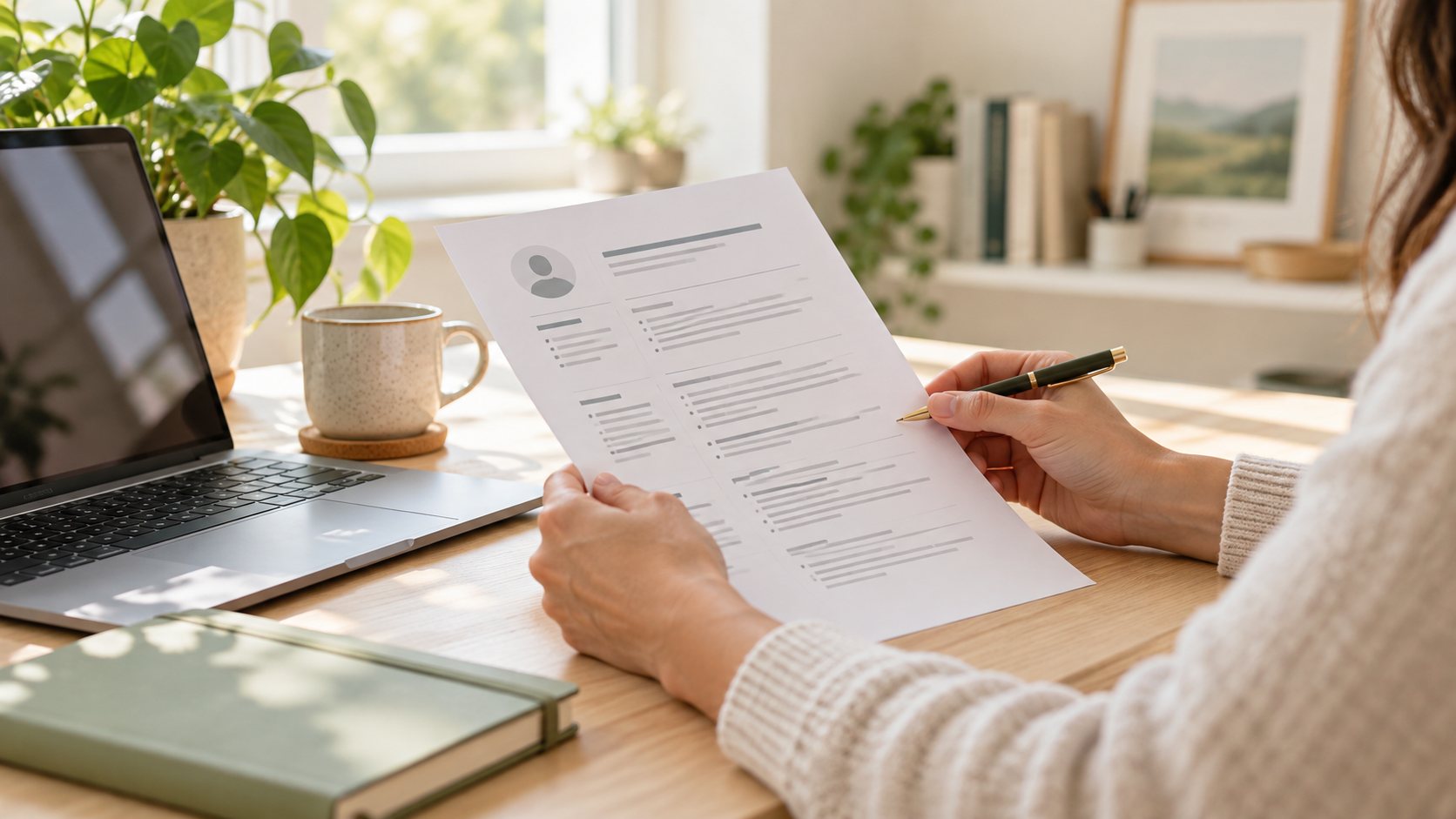
A good cover letter explains which job you are applying for, why you are interested in that job, and what real experience you can contribute. Instead of repeating your entire CV, choose one or two examples that meet the need in the advert.
Identify what the role requires
Before writing, reread the posting and note the role’s three main requirements. Identify the tools involved, the tasks to perform and the teams you would work with. Then select requirements you can support with a real example. These matches should form the backbone of your cover letter.
Check out the company's product or service on its website. Instead of the sentence "I want to work in your well-established company", which can be sent to any institution, choose a concrete point that interests you in the job you are applying for. Do not explain a project that you do not know as if you know it.
State the role and your direction in the first paragraph
Use the position name and posting code if available. Then add a brief piece of information that connects you to this application: relevant project, education or work experience. You don't have to start with a long life story. The reader should be able to understand what the application is about in the first few sentences.
Sample opening: "I am applying for your Customer Support Specialist position. I have tracked participant questions in event registrations for our student organization; I would like to leverage this experience in your team focused on user communication." Use this phrase only if it fits your own experience.
Demonstrate a skill with a specific example
Do not leave the phrases “I am a strong communicator” or “I am a team player” alone. Describe what you did in which environment and what came out. If it is a team effort, state your own share. If you don't have paid experience, a course project, volunteering, or club responsibility would be a suitable example.
If you know a numerical result, use it in a way that you can verify. Don't add a percentage to an improvement you haven't measured. Streamlining the process, completing a deliverable, or producing a usable document are also outcomes that can be clearly communicated.
Keep the body concise and the closing clear
A practical outline is three or four short paragraphs: reason for application, relevant evidence, connection to the employer, and closing. There is no universal word count rule; The employer's instructions come first. Remove unnecessary repetitions by checking whether each sentence contains new information.
- First paragraph: Which position and why this application?
- Body: What example or skill is associated with the posting?
- Closing: Thank you and request to discuss your contribution in the meeting.
Check consistency and language with CV
The job titles, dates and tools in the cover letter should not conflict with your CV. If the application is requested in English, prepare the entire cover letter in consistent English; clean up untranslated titles and incorrect company name. It is an easily noticed mistake that the name of another institution remains when copying an application.
You can use ToolsCD's cover letter tool to edit the first draft. Verify each claim in the suggested text yourself; Do not send the text without reading it. If the file is desired, follow the format instructions in the advertisement.
Read it from the recipient’s perspective
Read the text out loud. Simplify unclear sentences and reduce lines that repeat the same skill. Open the file on the phone and check that the headings, characters and page breaks appear correctly. A cover letter is not a guarantee of an interview; Its purpose is to make it clear why your application is relevant.
Final checklist
Check the steps you have completed. Your selections reset when you leave this page.
0 / 5 steps completedFrequently asked questions
Can I use the same cover letter for every application?
You can keep a basic outline; however, re-evaluate the role, company, and example of experience you choose with each application.
If a cover letter is not mandatory, should I include it?
It may be useful if the submission system allows it and you have a relevant contribution to describe. Take the employer's documentation instructions as basis.
Sources and further reading
This guide was created for ToolsCD. These sources help you explore the topic further; examples do not guarantee a job offer.